rare dahlia tubers for sale
Rare dahlia tubers for sale before they all sell out
Rare dahlia tubers for sale go fast, but buyers who know where to look, how to compare growers, and what to verify can find better options sooner.
Published 4/19/2026
Share this post
Help more growers, small farms, and dahlia collectors find it.
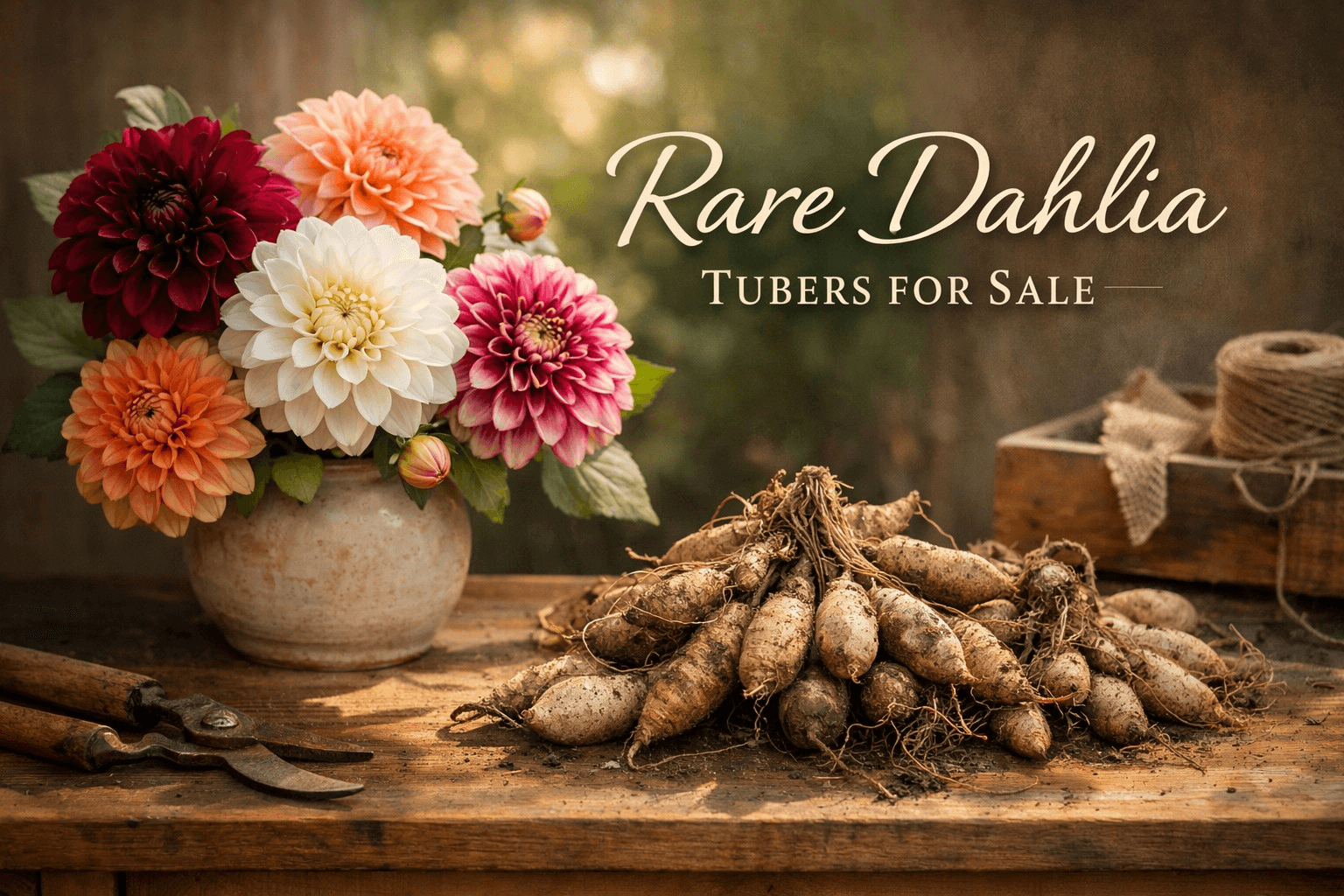
If you are searching for rare dahlia tubers for sale, the smartest move is to get specific early, compare growers carefully, and know what to verify before checkout. The best listings disappear fast, especially during sellout season, but buyers who understand timing, true-to-name handling, and seller trust usually find better options with much less panic.
Why rare tubers disappear so quickly
Rare dahlias sell differently from standard garden varieties. A sought-after variety may only yield a modest number of saleable divisions from one season’s stock. Some cultivars make awkward necks, some divide poorly, and some simply do not produce enough clean tubers to support a big sale. That means even a respected grower may only list a handful.
This is why buyers often feel like the rare side of the market moves in a rush. It does. But the answer is not to buy frantically. The answer is to understand what you are looking at and be ready when the right listing appears.
Part of the challenge is that “rare” can mean different things. Sometimes it means a newer introduction with limited circulation. Sometimes it means a color or bloom form that buyers are chasing hard that season. Sometimes it means a variety that is just difficult to source cleanly and true-to-name. All three create demand, but they do not carry the same level of risk or buyer urgency.
If you are trying to decide where to find rare dahlia tubers, begin by thinking less like a bargain hunter and more like a careful collector. Good listings are usually tied to growers who know their stock, label seriously, and are willing to say exactly what the buyer is getting.

Where better rare listings usually come from
The best rare listings often come from smaller growers who know each variety well. That does not mean large sellers are not worth watching. Some absolutely are. But many of the most interesting and hardest to source varieties move through hobby growers and small seasonal sellers first.
1. Small growers with tight, honest inventories
A smaller seller may only list a few varieties, but those listings can be stronger because the grower has direct knowledge of each clump, each division, and each label. In the rare dahlia world, that matters more than having a giant catalog.
A thoughtful grower will often say when a variety is limited, when it is prone to mix-ups in circulation, or when the tubers are smaller than average but still sound. That kind of detail is what buyer trust looks like in this niche.
2. Marketplace pages where you can compare growers faster
A dedicated marketplace can save you a lot of time. Instead of chasing scattered sale posts, old screenshots, and social updates, you can start in one place. On The Dahlia Hub, buyers can Register free, use Browse varieties, and visit Meet growers to compare who is offering what. That structure is especially useful when you are tracking hard to find dahlia tubers and want something more efficient than refreshing random pages.
3. Growers who sell fewer varieties but sell them well
A common mistake is assuming the seller with the longest list is the best place to shop. In reality, rare tuber buyers often do better with sellers who list fewer varieties and present them more clearly. A clean, careful listing for one exceptional cultivar is usually worth more than a huge list with vague descriptions and weak labeling signals.

How to judge rare listings without getting swept up
The pressure around rare dahlia tubers for sale can make buyers move too fast. That is how people end up with poorly described stock, confused expectations, or varieties that were never tracked carefully in the first place.
1. Check whether the seller sounds grounded in real dahlia selling
A trustworthy listing should answer the practical questions first. Is this a single tuber, a clump, or another form of plant material? Does the seller mention a viable eye, dividing, storage, or shipping timing? Is the labeling confidence clear?
Rare status does not excuse vague selling.
2. Look for true-to-name discipline
This matters even more with rare varieties than with common ones. If buyers are paying a premium, they are not paying for something close. They are paying for the cultivar they intended to buy. A seller who takes true-to-name seriously will usually communicate that in small ways. They may explain how they label in the field, how they separate clumps, or why they pulled a questionable plant from sale.
That is a green flag.
3. Watch for clean, realistic communication
A good grower does not need polished marketing language. They need believable detail. “This one made fewer saleable divisions than expected.” “The eyes are just waking up, so shipping starts next week.” “This variety has been a strong performer for me, but I only have three clean tubers.”
That tone builds buyer trust. It sounds like someone who handled the stock, not someone just trying to manufacture urgency.
4. Be careful with hype that outruns the facts
Rare does not automatically mean worth any price, and it does not automatically mean the listing is better. Some sellers lean hard on the scarcity angle and give very little information about condition, timing, or handling. That is where buyers need to slow down.
A rare variety with a vague description is still a vague listing.
What to verify before you buy
This is the part that protects you. If you are buying rare stock, ask the questions that matter before the cart starts feeling emotional.
The basics that still matter
No matter how exciting the variety is, the same fundamentals apply:
- Does the tuber have a visible viable eye or clear crown tissue?
- Is the neck intact?
- Has the variety been tracked confidently and sold as true-to-name?
- When will it ship?
- What happens if it arrives damaged?
The rare market sometimes makes buyers forget that healthy plant material matters more than scarcity talk.
The rare-market questions that matter too
Ask whether the grower has bloomed the variety themselves. Ask whether they consider the listing fully confirmed. Ask whether the variety is limited because of genuine low stock, or because it is still being built up carefully. Those answers can tell you a lot.
For example, imagine a grower lists one of the season’s most wanted blush varieties. Instead of pushing urgency, they explain that it only yielded four strong divisions, all from stock they bloomed and labeled themselves the prior season. That kind of explanation is useful. It gives you context without pressure.
Why timing changes everything
The best rare listings often disappear because buyers waited too long to make decisions they could have prepared for in advance. If you know the varieties you are chasing, it helps to have your shortlist ready before sales open. That way, when rare dahlia varieties for sale finally appear, you are comparing fit and trust, not scrambling from zero.
Midway through your search is the right time to make that process easier. Register free on The Dahlia Hub to buy and or sell, compare growers in one place, and find better options before the strongest listings disappear.
A calmer strategy for finding rare varieties
The buyers who do best with rare dahlia tubers for sale usually follow a simple pattern. They track growers they trust, stay specific about the varieties they want, and move decisively when the listing checks out.
Step 1: Build a realistic wish list
Do not chase every trending variety. Pick the cultivars you genuinely want to grow, whether that is because of bloom form, color, stem quality, or garden performance. A focused wish list makes it much easier to compare listings quickly.
Step 2: Learn who actually grows what
This is where marketplace discovery helps. If you are trying to figure out where to find rare dahlia tubers, it is much easier when you can compare growers and varieties in a structured way. A marketplace does not remove scarcity, but it does reduce the chaos around finding the right seller.
Step 3: Prepare before sellout season peaks
Know your shipping preferences. Know which varieties you would buy as a single tuber and which ones you would consider only from a seller with especially strong labeling discipline. Rare buying gets easier when fewer decisions are being made on the fly.
Step 4: Stay honest about condition versus scarcity
A rare cultivar still needs to be healthy. A listing that makes sense for a common variety still needs to make sense for a rare one. If the tuber description is weak, the photos are confusing, or the seller cannot answer basic questions clearly, scarcity alone is not enough.
Why a marketplace can help rare buyers the most
Rare tuber buyers are usually balancing two things at once: discovery and trust. You want to find the unusual varieties, but you also want some confidence about who is selling them. That is exactly where a focused marketplace can help.
On The Dahlia Hub, buyers can use Browse varieties to narrow the field, then check Meet growers to see who is listing what. That makes it easier to compare options without digging through scattered sale posts. It also helps careful small sellers stand out, which is often where the best hard to find dahlia tubers show up first.
And if you are a grower building stock of rare cultivars yourself, a clearer marketplace helps you present those varieties with more confidence and less confusion. If that is your side of the equation too, you can Open your store.
FAQ
Where to find rare dahlia tubers without wasting time?
If you are asking where to find rare dahlia tubers, start with growers who know their stock and with marketplaces that let you compare varieties and sellers quickly. Scattered searching usually creates more stress than better results.
Are hard to find dahlia tubers always more expensive?
Not always, but they often carry a premium because supply is limited. What matters more than price alone is whether the seller offers clear information about condition, viable eyes, labeling, and timing.
How can I tell if rare dahlia varieties for sale are trustworthy?
The best rare dahlia varieties for sale usually come with calm, specific details. Look for clear descriptions, true-to-name confidence, realistic inventory, and a seller who sounds like they actually handled the stock.
Is it better to buy rare tubers early or wait?
Usually earlier is better, especially if you already know what you want. The strongest listings often go first, and buyers who prepare in advance tend to make better choices with less pressure.
If you came here looking for rare dahlia tubers for sale, the best approach is not to chase every listing in a panic. It is to know your varieties, compare growers carefully, and move quickly only when the quality and trust signals are there. Register free on The Dahlia Hub to buy and or sell, discover better listings, and find the rare dahlias you actually want before they are gone.
Share this post
Help more growers, small farms, and dahlia collectors find it.
Community comments
Growers and buyers can add to the conversation
Questions, practical follow-ups, and firsthand experience are welcome here.
0 comments