when to divide dahlia tubers
When to Divide Dahlia Tubers for Better Sales
When to divide dahlia tubers with practical packing, labeling, and timing advice that helps small growers protect quality and build repeat buyer trust.
Published 4/22/2026
Share this post
Help more growers, small farms, and dahlia collectors find it.
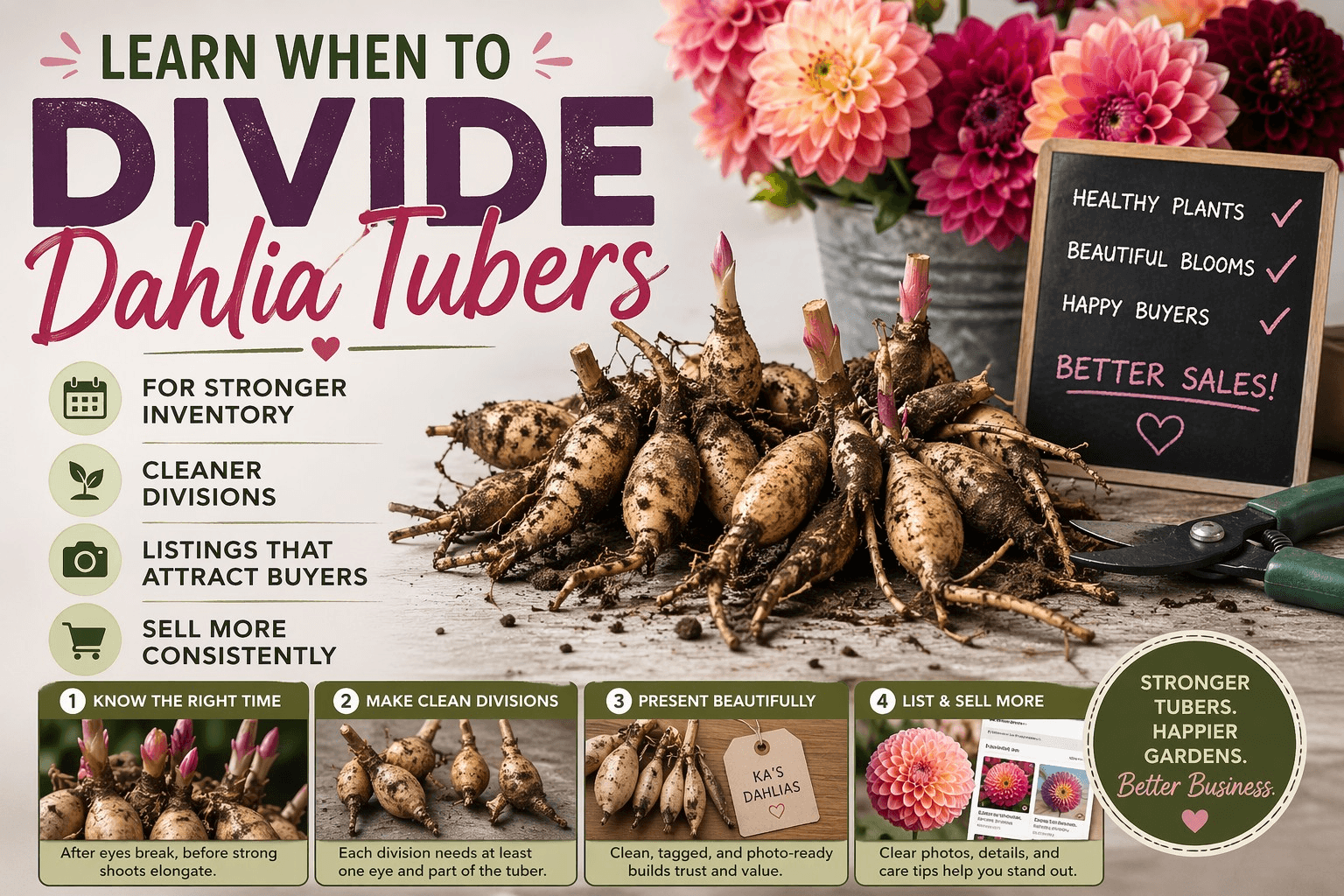
If you are wondering when to divide dahlia tubers, the short answer is this: divide when you can clearly see a viable eye and handle the clump without damaging it, because that is what turns into clean, sellable inventory buyers trust. For a seller, timing is not just about plant health. It directly affects listing quality, pricing confidence, and repeat buyers.
Some growers divide in the fall. Others wait until late winter or early spring. Both can work. The difference is how clearly you can identify eyes, how stable your storage conditions are, and how soon you need inventory ready for sale.
The Two Windows That Actually Work
There are really only two practical answers to when to split dahlia tubers, and each one serves a different type of grower.
Fall dividing after digging
This happens right after you lift your clumps and let them cure for a few days.
- You already have the clump in hand
- You reduce storage bulk immediately
- You can organize inventory early
The downside is visibility. Eyes are often hard to see in the fall, especially on certain varieties. That increases the risk of creating blind tubers, which leads to unhappy buyers and refunds later.
Fall dividing works best if you are experienced at spotting eye placement and you are labeling very carefully.
Late winter to early spring dividing
This is the preferred window for many sellers.
- Eyes are swollen and easier to identify
- You can confidently create viable divisions
- Your listings are more accurate and reliable
The tradeoff is storage. You need to keep clumps stable through winter without rot or dehydration.
If your goal is clean, true-to-name inventory that builds trust, this is usually the better answer to when to divide dahlia tubers.

How to Decide What Works for You This Season
Instead of asking for one perfect date, think in terms of your workflow and sales timing.
If you plan to list early
Some sellers want inventory live as early as January or February. In that case:
- Divide in late winter
n- Confirm visible eyes before cutting
- Photograph actual divisions for your listings
This gives buyers confidence. They are not guessing. They are seeing what they will receive.
If you are managing a large volume
If you have dozens or hundreds of clumps, fall dividing can help reduce overwhelm later.
- Rough divide large clumps in fall
- Final clean cuts in late winter once eyes are visible
This hybrid approach is common among experienced growers.
If you are newer to selling
Wait. Seriously.
Late winter dividing is more forgiving. You will make fewer mistakes, waste fewer tubers, and avoid sending out questionable stock.
That alone is worth the delay.

Step by Step: How to Divide Dahlia Tubers for Saleable Inventory
This is where most generic guides fall short. The goal is not just to grow a plant. It is to create something you can confidently list and sell.
1. Start with a healthy clump
Look for firm tubers attached to a solid crown. If the neck is broken or the tuber feels soft, it is not worth your time.
A sellable division needs three things:
- A viable eye
- An intact neck
- A healthy body
Miss one of these and you are risking buyer trust.
2. Identify the eye before cutting
This is the most important step in how to divide dahlia tubers.
Eyes form on the crown, not on the tuber itself. In late winter, they appear as small raised points or colored bumps.
If you cannot find an eye, do not cut yet. Give it more time or adjust your storage conditions slightly to encourage sprouting.
3. Make clean, intentional cuts
Use a sharp knife or pruners and cut so each piece includes crown tissue and one clear eye.
Avoid hacking apart clumps randomly. That is how you end up with blind divisions.
4. Label immediately
This is where many sellers lose money.
As soon as you divide dahlia clumps, label each piece. Do not rely on memory or temporary groupings.
A simple system works best:
- Permanent marker on a tag
- Matching bin or tray for each variety
One mix-up can undo an entire season of careful growing.
5. Cure before packing or storage
Let fresh cuts dry for a day or two in a cool, dry space. This reduces the risk of rot.
Only after curing should you move into long-term storage or packing for sale.

What Usually Goes Wrong and How to Avoid It
Dividing too early
Cutting before eyes are visible is the fastest way to create unsellable inventory.
You may think you see an eye. You probably do not.
Wait until it is obvious.
Over-dividing small clumps
Not every clump needs to be maximized.
If a division looks weak or questionable, keep it intact. A slightly larger, healthy piece is far more valuable than two risky ones.
Poor labeling systems
Even experienced growers make this mistake under time pressure.
If you are dividing multiple varieties in one session, slow down and label each one as you go. Buyers care deeply about true-to-name accuracy.
Rushing to list before you are ready
It is tempting to list inventory early, but unclear or low-confidence divisions hurt your reputation.
Strong listings come from clean divisions, clear photos, and accurate descriptions.
If you want to understand how timing connects to selling windows, this is worth reading: Dahlia Tuber Sale Calendar: When to Buy Without Missing Out
Turning Dividing Into a Selling Advantage
Dividing is not just a chore. It is one of the few moments where you can directly improve your product.
Think about what a buyer wants:
- A visible eye
- A clean cut
- Confidence that it will grow true-to-name
When you divide at the right time and document your process, you can show that in your listings.
That is what separates casual sellers from growers people come back to.
Mid-Season Action: Get Your Inventory Ready to List
If you are in that late winter window right now, this is your moment.
- Finish dividing your strongest clumps
- Photograph clean, labeled divisions
- Organize by variety and quantity
Then get them in front of buyers who are actively looking.
Register free and start selling: Register free
Where to Sell Without Friction
General platforms can work, but they often come with confusion around variety names, unclear expectations, and mixed-quality listings.
On a focused marketplace, buyers are already searching by variety and expecting true-to-name tubers.
You can:
- List clearly labeled inventory
- Reach buyers who understand what they are buying
- Build repeat relationships over multiple seasons
Explore what other growers are listing here:
FAQ: Dividing Dahlia Tubers for Selling
When to divide dahlia tubers for best results?
Late winter to early spring is usually best because eyes are visible and divisions are more reliable. This leads to stronger inventory and fewer buyer issues.
How to divide dahlia tubers without losing viability?
Always include a visible eye, a healthy neck, and part of the crown. Clean cuts and proper curing help prevent rot and improve success rates.
Can I divide dahlia clumps in the fall?
Yes, but it requires experience. Eyes are harder to see, which increases the risk of blind tubers. Many sellers prefer to wait.
When to split dahlia tubers if I want to sell early?
Divide in late winter, confirm eyes, and list shortly after. This timing balances buyer demand with product reliability.
Build a System You Can Repeat Every Year
The best answer to when to divide dahlia tubers is the one that fits your storage conditions, your timing, and your selling goals.
But if you want consistency, late winter dividing with visible eyes is hard to beat.
It leads to cleaner inventory, better listings, and buyers who trust you enough to come back next season.
Share this post
Help more growers, small farms, and dahlia collectors find it.
Community comments
Growers and buyers can add to the conversation
Questions, practical follow-ups, and firsthand experience are welcome here.
0 comments